
Nodel software
Nodel connects everything in your space.
Automatic designed Nodel to be practical: lightweight to deploy, simple to operate, open to extend and resilient enough for demanding public environments.

open control
A distributed architecture that stays understandable.
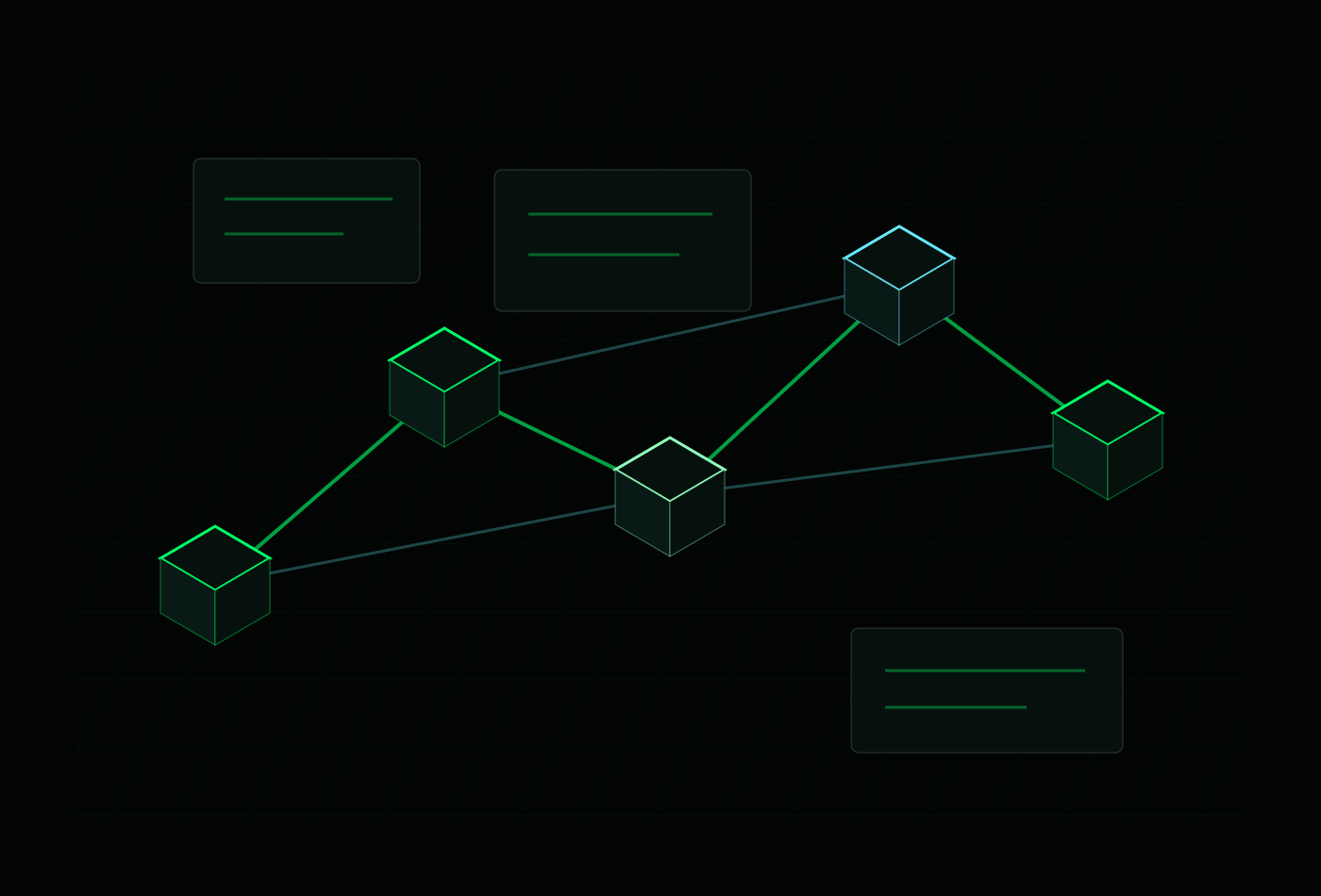
Nodes, actions and signals
A Nodel system is made from nodes. Each node performs actions, responds to signals and can represent a device, service, schedule, control surface or integration point. Nodes announce themselves on the network, reducing protocol overhead and keeping systems understandable as they grow.
REST API and Python recipes
Nodel exposes a REST API and supports Python-based recipes, making it suitable for device control, monitoring, automation, show control, dashboards and custom operational workflows.
Scales without forcing everything through one box
The distributed architecture scales from a single node to large networks while limiting central points of failure and placing minimal load on IT infrastructure.
where Automatic helps
From first topology to long-term support.
provenance
Developed with the people who had to run it.
Nodel was originally commissioned by Museums Victoria and developed in partnership with Automatic. It has run for over a decade in continuous public operation across Melbourne Museum, Scienceworks and Immigration Museum — more than a thousand nodes — with thousands more nodes in daily use at Arts Centre Melbourne, ACMI and Australian Sports Museum, among many other venues.
engage
Planning or extending a Nodel system?
Automatic can help with architecture, recipes, interfaces, integration risks and long-term operational support.